REFERENCE NOTE · FOR PLATE 01
What Is Eyebrow Feathering? A Training Guide
Feathering builds a brow one fine stroke at a time, and each stroke follows the direction natural hair grows. This note explains how the technique works, what an artist has to learn before picking up a tool, and where feathering sits among the other brow styles.

SHEET A
Definition
Tools
Where it suits
SHEET A · THE TECHNIQUE
How Eyebrow Feathering Works
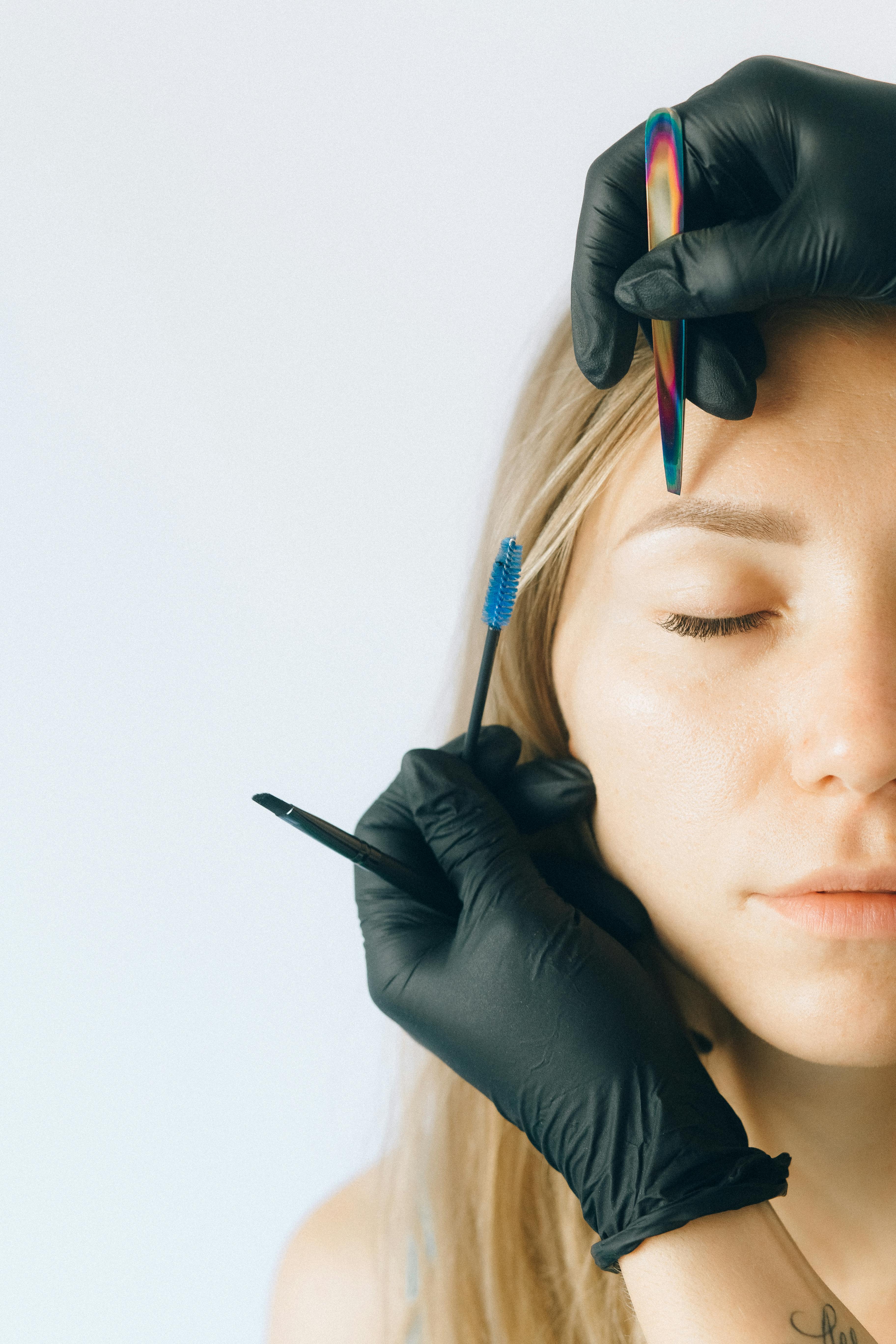
Eyebrow feathering is a cosmetic tattoo technique. The artist places pigment in fine, crisp lines that look like individual brow hairs. The strokes are layered, angled and spaced to copy the way a natural brow grows: upward and fanned at the front, then flatter and tapering towards the tail. Done well, the result reads as hair rather than colour.
In Australia, “feathering” is often used as a general name for hair-stroke brows. Many people use it almost interchangeably with microblading. In training terms, what matters is the skill underneath. You need to judge stroke direction, depth, spacing and pigment choice on real skin, and all of that starts with a mapped, balanced design.
Feathering tends to suit clients who want definition that still looks soft and natural, and sparse brows that need their gaps filled. How the strokes heal depends on the client’s skin, so part of the training is learning to assess skin before choosing hair strokes, shading or a mix of the two.
SHEET B · THE CONSTRUCTION
What Artists Need to Learn
01
Brow mapping and symmetry
Measure the start, arch and tail against the face’s own proportions. Our Brow Mapping Guide covers this step in depth.
02
Skin and hair-stroke direction
Read the skin type and existing hair growth, then plan stroke angles that sit naturally within the brow.
03
Stroke control and pigment placement
Keep pressure, depth and spacing steady so every line heals crisp, and choose pigment that suits the client’s colouring.
04
Hygiene, consultation and aftercare
Prepare a clean working area, set clear expectations with the client and explain how to care for the brows as they heal.
SHEET C · SIDE BY SIDE
Feathering Compared With Other Brow Styles
Each brow style solves a different problem. Most artists learn a hair-stroke method first and then add shading, so they can offer each client the finish that suits their skin and the look they want.
PLATE 01
Feathering
Fine hair strokes layered to look like natural brow hair. A soft, defined finish.
PLATE 02
Microblading
Hair strokes made by hand with a manual blade tool. Hand control and even pressure matter most.
PLATE 03
Nano Brows
Hair strokes made with a machine rather than a hand tool. Very fine lines built with machine control.
PLATE 04
Powder / Ombre
Soft shading instead of strokes, often fading from light at the front to deeper at the tail.
REFERENCE NOTES
Continue the Folio
Ready to learn feathering at a drawing table? Enquire or enrol in Plate 01. You can also send a question through the contact page.