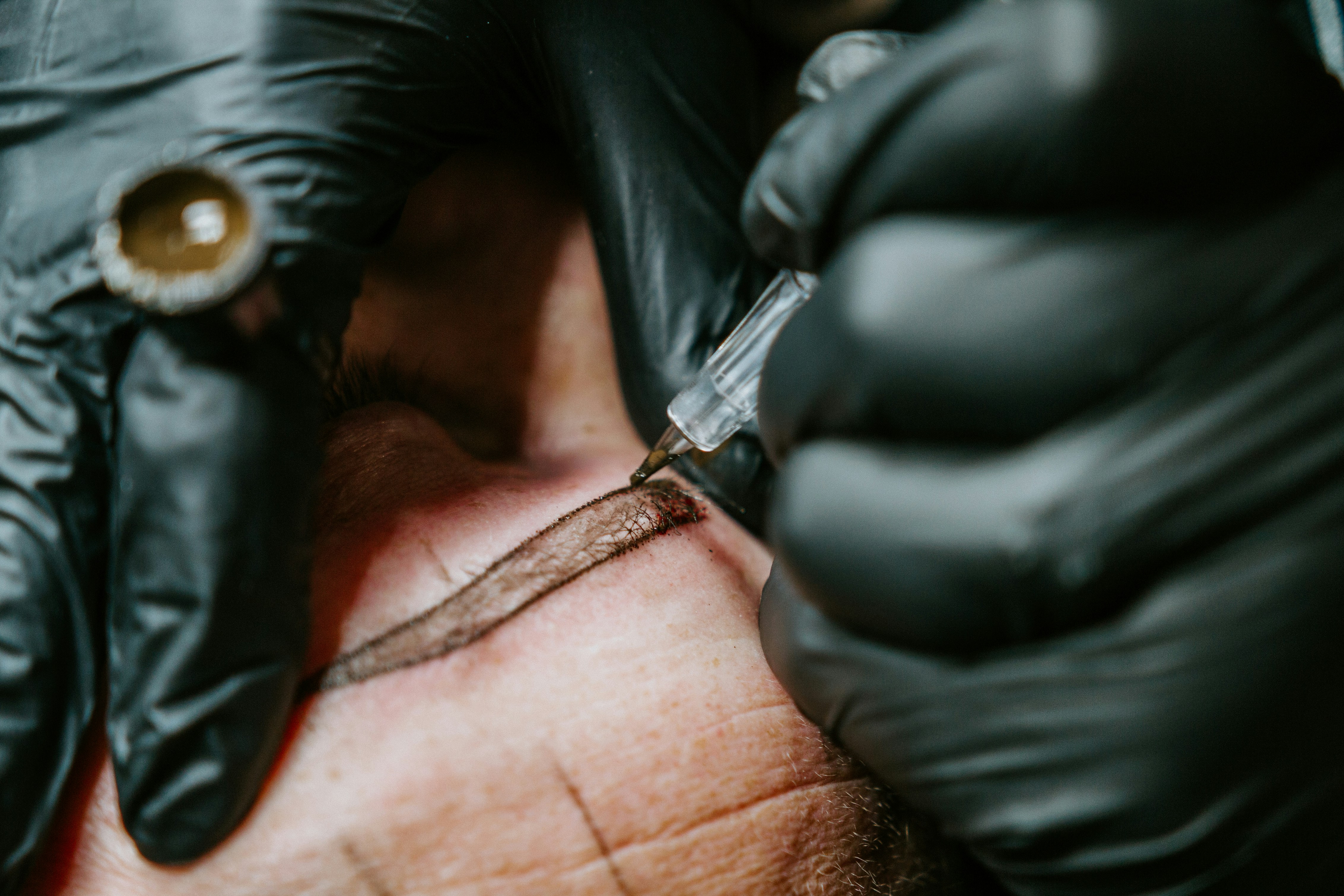
Cosmetic tattoo eyebrow training is built in layers. Artists learn why a brow is drawn a certain way before they learn how to draw it, and they prove clean, safe habits before any pigment reaches skin. This note walks through each layer so you can recognise a well-structured course.
SCOPE OF THIS NOTE
SHEET I–II
Theory and Hygiene Come First
A steady hand is not enough without the reasoning behind each stroke. These foundations are where good brow work is really decided.
Theory: Understanding Skin, Structure and Colour
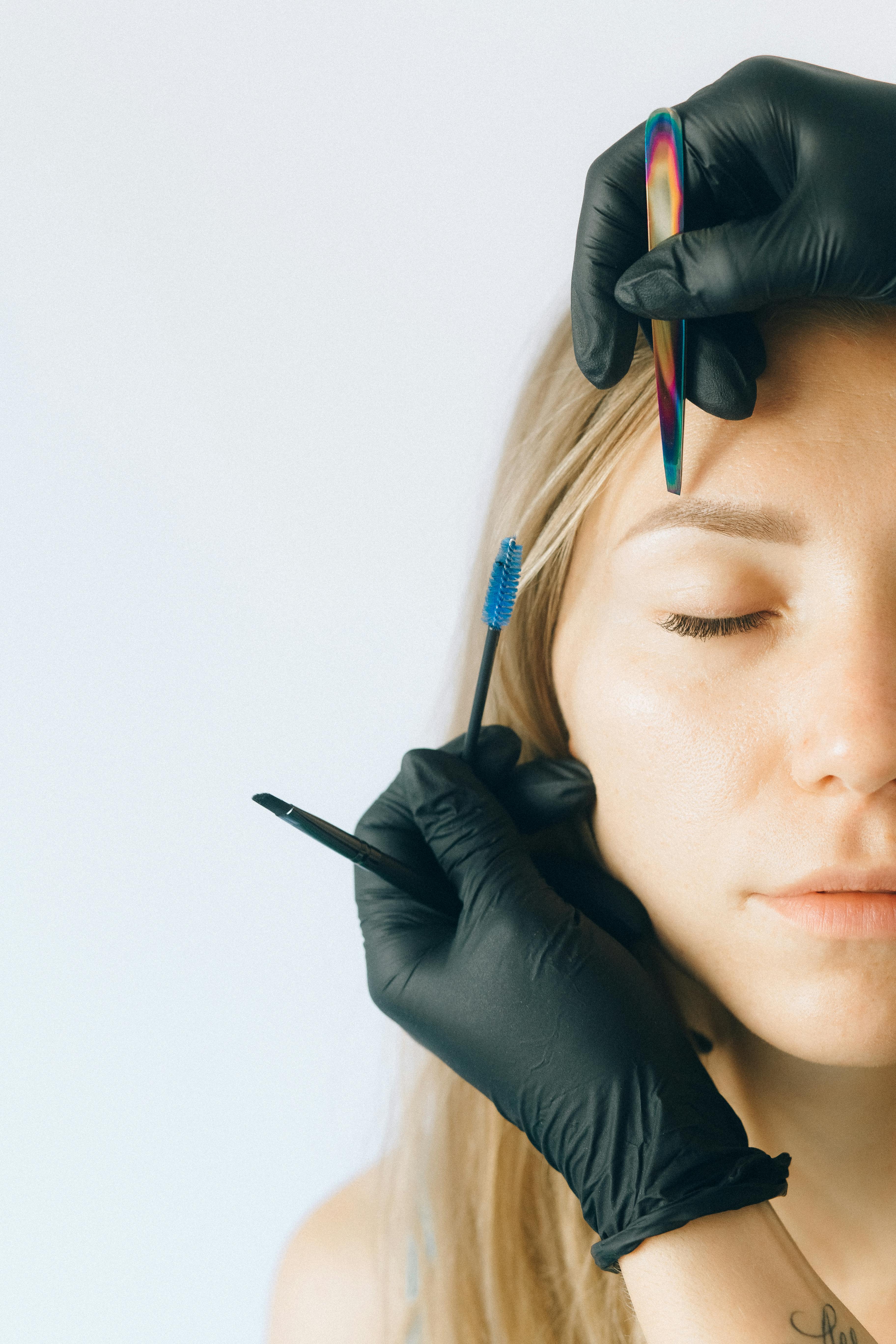
Expect to study how skin is layered and why different skin types hold pigment differently. You will also learn how pigment colour interacts with undertones, and how to map a brow so it suits the bone structure of the face. Mapping ties everything else together. It is covered in depth in our Brow Mapping Guide. Theory also explains the differences between hair-stroke, shaded and combination techniques.
Hygiene: Clean Habits Before Any Pigment
Cosmetic tattoo breaks the skin, so infection control is not optional. Training covers hand hygiene and barrier protection, handling and disposing of single-use items, preparing and cleaning the workstation, and avoiding cross-contamination between tools, pigments and surfaces. Consultation, client consent and aftercare advice belong here too. Health requirements for skin-penetration work can vary between states and local councils in Australia, so check with the relevant authority where you plan to practise.
SHEET III–IV
From Practice Work to Supervised Skill
Practice Work
Strokes and shading are built through repetition on practice surfaces before live work. The aim is consistency: even pressure, clean stroke direction, and shading that softens gradually instead of banding. Drawing brow shapes on paper also trains the eye for symmetry.
Supervised Skill Development
This is where a trainer’s feedback matters most. A trainer watches your hand position, mapping and pigment placement, corrects small habits before they become fixed, and helps you judge healed results against the plan. Read about the teaching approach on Our Trainers.
CHECKLIST
Questions to Ask Before You Enrol
To compare techniques side by side, see Choosing a Brow Course. For specific course details, contact the academy.
PLATE 06
Where This Training Is Taught
See what the Cosmetic Tattoo Eyebrow Course page covers, or ask about content when you enquire.
RELATED READING